
Writing a curriculum is the same as developing a training program
Invest in the toolkit to support your team and your business

When people asked me what I wanted to be when I grew up, my hard answer was ALWAYS: “a teacher”.
Fast forward to college, I thought maybe that will still be in the cards for me and I had also added that I wanted to open a restaurant - back then I wanted it to be my own place - that’s no longer the case today.
College was a very challenging time in my life as I went to a French school my entire life and although English was my “first” language, I learnt everything, I mean EVERYTHING in French at my school except for English of course.
My first week in college I fell into a slow spinning spiral of anxiety and insecurity. I had taken all of these topics before - why didn’t I understand a word that was coming out of my professors’ mouths? And on top of that - I took Calculus classes as this was my language, my forte. I think in formulas. All of a sudden I understood nothing. It was terrible.
My insomnia took over at full force. I turned to my friends from childhood to help me write my papers and I studied as much as I could. Yes, my girlfriends wrote some of my papers because I was failing out of college. The more I studied, the worse I did.
I was lost.
I had no idea what was happening and I felt like I was disappointing my parents to the highest degree because we couldn’t figure it out.
I ended up switching majors - a tab bit kicking and screaming. My best friend encouraged me to transfer into the School of Hospitality Administration since I had deep roots and understanding of business and entrepreneurship - thanks to my father - and I loved restaurants. I transferred and it changed the course of my life.
I did let go of this dream of being a teacher. I truly believed it would never actualize because I cannot go back to school EVER. This thought process was all too challenging and caused me such anxiety. I leaned fully into my career in hospitality and I have never looked back.
What I didn’t realize at that time is I had been a teacher my entire life already. When I stepped into my first roles in the hospitality industry, my focus was always training and teaching my colleagues, our guests, our vendors. I never saw it in this way until a few years ago, a former boss and mentor of mine said “Kim, you have always been a teacher! You were the best trainer we had in the business. Everyone raved about their time spent with you and wanted more.” An Aha moment. Sometimes it’s our collective that are our mirrors.
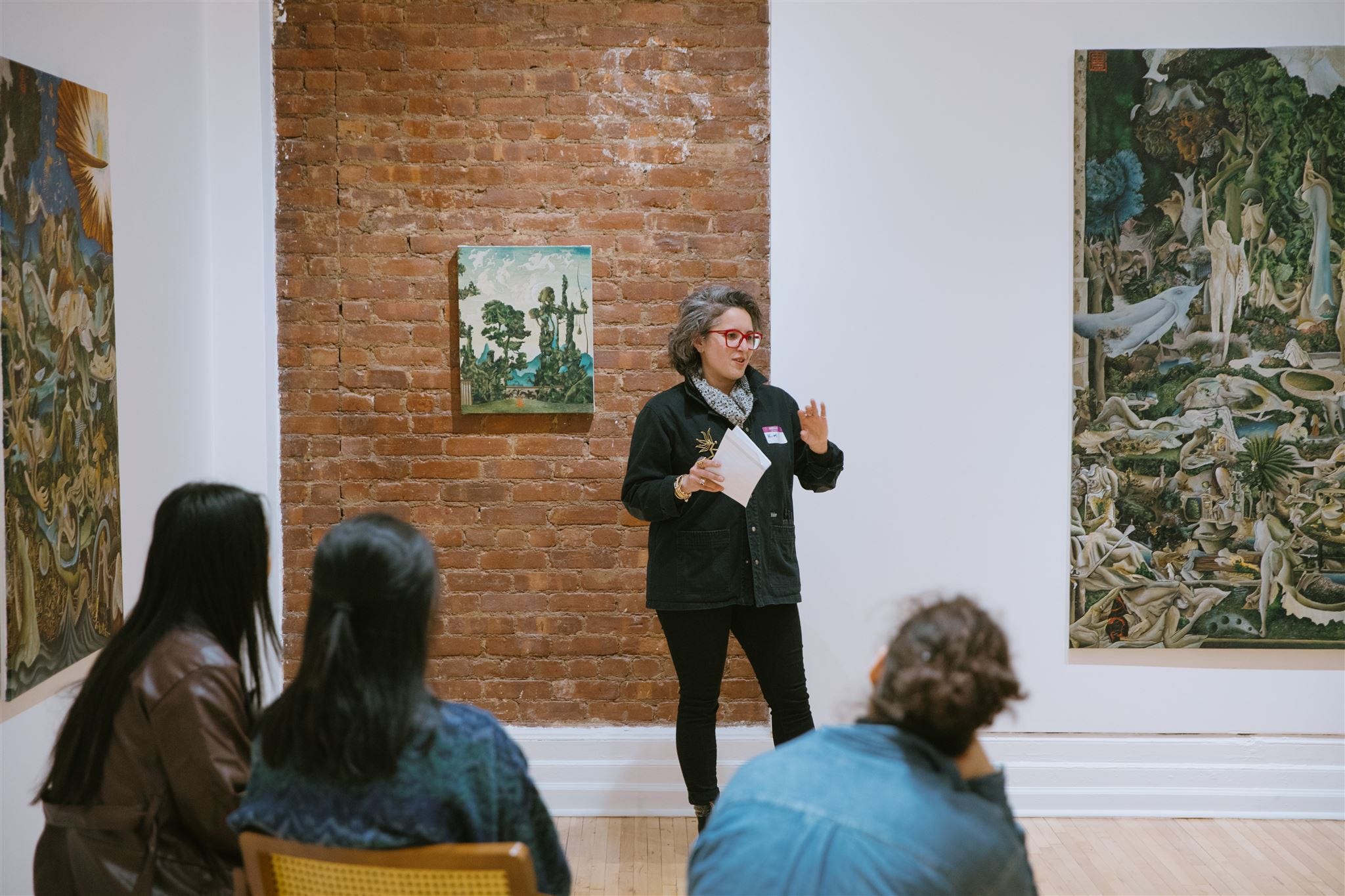
Fast forward to 4ish years ago, when a few conversations around education and guest lecturing landed in my lap. One thing led to the next and I was giving teaching a shot! I was terrified! I felt extremely unprepared because teaching in a restaurant setting is VERY different than teaching in a classroom. Also, how was I to create a curriculum? I haven’t studied this!
I’m grateful I landed at CUNY Kingsborough. My colleagues were the most helpful and continue to be some of my most collaborative partners. One of them has a masters in education so he gave me pointers and suggestions at each step, each semester, even today.
I spent a few years teaching in multiple schools (KBCC and ICE) and for the better part of this year facilitating virtual workshops with the NYC Small Business Services for the Restaurant Academy. I have learnt a lot building curriculums that are impactful and have since integrated these builds into the training programs I build for restaurants.
A window into my non-negotiables:
A curriculum is the guiding light. It needs to be digestible, clear, concise and leave little to no room for interpretation or guessing.
Create the schedule with dates and who will be training them for each day / topic. Ie, onboarding may be done by the HR specialist or the GM / Chef and then who will be training them the rest of the days?
Each day / week needs to have its own focus and each day / week builds upon the next. Start at the baseline to build the foundation and then continue to stack on top of that. As an example, in my dining room class where we open a restaurant every semester (yes - it’s wild and one of the most rewarding classes!)The first week we learn from each other about why each of us is in the program, we build our internal culture and we review what dining service means and what each role is. As well as discuss the table numbers, position numbers and start to strengthen our arms and wrists for tray and plate carrying. The goal is that each day your new hires are learning something new without feeling overwhelmed. Again - it’s a building process.
Make the assignments achievable. Don’t overload the homework. It’ll deter them. Your new hires have a full life outside of this job opportunity. Set them up for success for their training program and to be a successful and valuable part of your team.
Administer tests every day whether that’s verbal or written. We learn through repetition and each person and their own language for learning and anxieties around testing. Create a diverse testing protocol. Set them up to succeed not fail.
Scheduled recap sessions. Schedule in 5-10minutes at the beginning and at the end of each day and week to connect with how the trainee is doing and what they need more support or resources for. Open up the space for them to raise their hand and ask questions.
The intentional build of training programs plays a big part in the general foundation of your company culture. Taking time to create and investing in the education of your team has a significant and measurable return.
If you’re curious to learn more, you can connect with me here. I always welcome a conversation around culture and training!
Culture isn't a poster on the wall. It's a curriculum you invest in. Lerner's work is a masterclass in training as the foundation of real hospitality.